
Showing posts with label ostalo / misc.. Show all posts
Showing posts with label ostalo / misc.. Show all posts
31 July 2012
Blog Break
It's been 5 years, my blog and I deserve some time off. Thanks for reading and please stay tuned, we'll be back after the break. Meanwhile, stay well and enjoy life!


30 October 2011
Images of autumn
I don't have much presentable knitting to show you. It's not that I haven't been knitting, it's just that it's all in different stages of unfinishedness and as such extremely resistant to photographing. Instead, I first give you some photos completely unrelated to knitting and then some fresh photos of old projects :) But please stay tuned, some new knitting is sure to follow, I only have half a sleeve to finish a cardigan :)
I really love autumn. Even with all the rain, and the cold, and this terrible wind that we have here, and the dreariness and everything. It has a certain charm, a certain poetic aura about it that gets me every year. And the colours, ah, the colours...
This year the beginning of October was so warm that you could sit in the park in short sleeves.

But soon enough the windbreaks were up at the beach

and the playgrounds were deserted.


And then finally it was cold enough to put on the February Lady Sweater I finished back in July (wool+alpaca at 40 degrees!), pack my camera and a willing photographer and head off for the river bank.

I paired it with two more projects that never had proper photos of them taken either: Travelling Woman shawl and Drops' 98-55 Bag with cable pattern in Eskimo.

Aren't I lucky that autumn colours are in vogue at the moment? I had put on a pair of Jaywalkers in matching colours too but we forgot to photograph them :(
I really love autumn. Even with all the rain, and the cold, and this terrible wind that we have here, and the dreariness and everything. It has a certain charm, a certain poetic aura about it that gets me every year. And the colours, ah, the colours...
This year the beginning of October was so warm that you could sit in the park in short sleeves.

But soon enough the windbreaks were up at the beach

and the playgrounds were deserted.


And then finally it was cold enough to put on the February Lady Sweater I finished back in July (wool+alpaca at 40 degrees!), pack my camera and a willing photographer and head off for the river bank.

I paired it with two more projects that never had proper photos of them taken either: Travelling Woman shawl and Drops' 98-55 Bag with cable pattern in Eskimo.

Aren't I lucky that autumn colours are in vogue at the moment? I had put on a pair of Jaywalkers in matching colours too but we forgot to photograph them :(
02 October 2011
Images of summer
Goodbye, summer! I'm glad you're over so that I can finally welcome the long-awaited autumn, knitters' favourite season :)
 |
| Some very, very happy feet :) |
 |
| Some very, very happy girls :) |
 |
| Some very, very happy grass :) |
05 September 2011
Why do I like reading?
Since that post on books I've been thinking why I like reading. What is it that has always drawn me so strongly and irresistably towards books?
The first thing must be the magic of the story, the yarn spun from page to page, drawing you ever deeper into the plot, the characters and events. It was impossible to resist the temptation presented by the mystery of the unknown and the thrill of the suspense was, oh so addictive.
Then there's the imagination, whole new worlds and universes, which provided backdrops against which I could stage my childhood fantasies and play with them, turning them this way and that, playing a hero or a victim, a savior or a villain, a sheriff or a vigilante, a cowboy or an Indian, depending on the mood. I must have been an avid daydreamer back then. It is from these stagings, I guess, that my power of visualization developed, a blessing and a curse that's been with me from a very early age.
And finally, I think that the seclusion that reading offered is what I enjoyed. Even as a child I liked being alone and was never bored. Reading offered an opportunity to be alone when I was not, an opportunity to set myself apart from the rest of the world. And it worked.
Then came university (and later work) and a different kind of reading that I needed to learn. Reading for study, dissecting, analyzing. I didn't enjoy that as much. I had a feeling that it stripped books of their magic. And that is, at least partly, why I did not go on to study literature but opted for a different line of work. And I'm not sorry because the magic is back :)
The first thing must be the magic of the story, the yarn spun from page to page, drawing you ever deeper into the plot, the characters and events. It was impossible to resist the temptation presented by the mystery of the unknown and the thrill of the suspense was, oh so addictive.
Then there's the imagination, whole new worlds and universes, which provided backdrops against which I could stage my childhood fantasies and play with them, turning them this way and that, playing a hero or a victim, a savior or a villain, a sheriff or a vigilante, a cowboy or an Indian, depending on the mood. I must have been an avid daydreamer back then. It is from these stagings, I guess, that my power of visualization developed, a blessing and a curse that's been with me from a very early age.
And finally, I think that the seclusion that reading offered is what I enjoyed. Even as a child I liked being alone and was never bored. Reading offered an opportunity to be alone when I was not, an opportunity to set myself apart from the rest of the world. And it worked.
Then came university (and later work) and a different kind of reading that I needed to learn. Reading for study, dissecting, analyzing. I didn't enjoy that as much. I had a feeling that it stripped books of their magic. And that is, at least partly, why I did not go on to study literature but opted for a different line of work. And I'm not sorry because the magic is back :)
20 August 2011
Klika Klika
Kažite dragička! Otvorena je nova onlajn prodavnica vune, i to Dropsove, i to najbliža nam do sada! Zove se Klika Klika i možete je naći na ovoj adresi, ali i na FB. Jedva čekam da tamo potrošim malo para :)))

08 August 2011
Books et al.
I've always been a voracious reader. Don't you just love that collocation, 'voracious reader'? It literally means that you eat books. And that is exactly what I did. I ate them, devoured them. From a very early age, I read and read and read. Voraciously, insatiably, unremittingly. Now, I would also add, indiscriminately. As a child, I read everything I could lay my hands on. (Which, as you can imagine, meant that I read quite a few books I couldn't understand or fully appreciate.)
When I now think about my childhood reading, I see myself in the countryside, at my grandparents' place in the summer. I'd take a book and head off into their huge garden, find myself a spot under a tree (it was too hot in the attic) and spend hours there, lounging in the hot, motionless silence of summer afternoons. I'd get up and pick a pear or go and gorge myself on raspberries. Idyllic is the word that comes to mind and, although my grandparents' house did not have manicured lawns, rose gardens or breathtaking views, this picture always reminds me of English countryside. Must be all the 19th-century novels I read there :)
I've also kept a reading journal. Since 1985. No profound thoughts or enlightened observations there, just a list of books I've read. Ordered chronologically, all 20-odd years of my reading. The first entry is Alexander Belyayev's KEZ Star (Zvezda Kec in Serbian translation), a forgotten classic of Soviet children's science fiction. It seems unbelievable that it was a prescribed school text only 25 years ago!
And I've filled several notebooks into which I copied sentences and passages I liked, sometimes whole pages. I still do that. It may seem pointless nowadays, with all the online collections of all possible quotations from all imaginable books, but I find it difficult to connect to these. These are just heaps of texts, other people's texts, bland, expressionless, meaningless to me. Not my quotations.
These days I read much less. Partly because of all the work-related reading, partly because I have far less time to waste away under a pear tree than when I was 13. But the addiction is still with me. I don't go anywhere without a book, I can't go to sleep if I don't read at least half a page. I'm usually too tired to read more than that anyway, but that's a story for a different kind of post. This year I've set myself a challenge, over at Goodreads, to read 20 books. Not many, but I'm not counting work-related literature. And I'm 2 books ahead already, which I consider to be quite an achievement, as one of them is Murakami's 600+ page The Wind-Up Bird Chronicle and another A. S. Byatt's 500+ page Possession. Not that sheer volume matters, but neither of them is exactly a breeze to read.
Now, if you've borne with me this far reading this pictureless post, tell me something about your reading habits. I won't ask you what kind of books you like or who your favourite author is (I've always hated these two questions!). Instead, tell me when and where you like to read and how your reading habits have changed over time.
When I now think about my childhood reading, I see myself in the countryside, at my grandparents' place in the summer. I'd take a book and head off into their huge garden, find myself a spot under a tree (it was too hot in the attic) and spend hours there, lounging in the hot, motionless silence of summer afternoons. I'd get up and pick a pear or go and gorge myself on raspberries. Idyllic is the word that comes to mind and, although my grandparents' house did not have manicured lawns, rose gardens or breathtaking views, this picture always reminds me of English countryside. Must be all the 19th-century novels I read there :)
I've also kept a reading journal. Since 1985. No profound thoughts or enlightened observations there, just a list of books I've read. Ordered chronologically, all 20-odd years of my reading. The first entry is Alexander Belyayev's KEZ Star (Zvezda Kec in Serbian translation), a forgotten classic of Soviet children's science fiction. It seems unbelievable that it was a prescribed school text only 25 years ago!
And I've filled several notebooks into which I copied sentences and passages I liked, sometimes whole pages. I still do that. It may seem pointless nowadays, with all the online collections of all possible quotations from all imaginable books, but I find it difficult to connect to these. These are just heaps of texts, other people's texts, bland, expressionless, meaningless to me. Not my quotations.
These days I read much less. Partly because of all the work-related reading, partly because I have far less time to waste away under a pear tree than when I was 13. But the addiction is still with me. I don't go anywhere without a book, I can't go to sleep if I don't read at least half a page. I'm usually too tired to read more than that anyway, but that's a story for a different kind of post. This year I've set myself a challenge, over at Goodreads, to read 20 books. Not many, but I'm not counting work-related literature. And I'm 2 books ahead already, which I consider to be quite an achievement, as one of them is Murakami's 600+ page The Wind-Up Bird Chronicle and another A. S. Byatt's 500+ page Possession. Not that sheer volume matters, but neither of them is exactly a breeze to read.
Now, if you've borne with me this far reading this pictureless post, tell me something about your reading habits. I won't ask you what kind of books you like or who your favourite author is (I've always hated these two questions!). Instead, tell me when and where you like to read and how your reading habits have changed over time.
20 February 2011
Birthday presents
The first surprise came on the day before my birthday so I was completely unprepared! And I still am! What I found in my mailbox was a gift token for Barka yarn!
Girls, you made me cry, that's how touched I was! Thank you for all the care and consideration and organization that you put into this!

And then, on the day of my birthday, while I was still at my morning coffee, the postman rang and these beauties arrived, a gift from Magrit and Olga. I was tempted to phone in sick at work, that's how much I wanted to stay at home and fondle the yarn!

Neizmerno ste me obradovale, hvala vam do neba! I nazad!
Girls, you made me cry, that's how touched I was! Thank you for all the care and consideration and organization that you put into this!

And then, on the day of my birthday, while I was still at my morning coffee, the postman rang and these beauties arrived, a gift from Magrit and Olga. I was tempted to phone in sick at work, that's how much I wanted to stay at home and fondle the yarn!

Neizmerno ste me obradovale, hvala vam do neba! I nazad!
01 January 2011
Recapitulations and resolutions, sort of
Things I managed to do in 2010:
Plans for 2011:
- lost 12 kilos
- knit/crocheted some 60 projects (over 20 of which are scarves, but let's not go into that right now)
- finished and defended my master's dissertation
- kept my sanity during that
Plans for 2011:
- write a proposal for my PhD thesis
- do a sewing course
- sew a Christmassy tablecloth for next Christmas
- make a guitar strap for my husband
- knit fewer than 20 scarves
- knit a pair of socks
- knit some soft, warm gloves
- knit
- purl
- knit
- purl
- do some crochet
- knit
- purl
- and knit some more...
27 December 2010
Pripreme, 3. deo / Preparations, Part 3
Apart from being two atheists celebrating two Christmases, this year we're having two Christmas trees as well :) An old, boring one, trimmed in red and gold (I'm showing you just a detail because I can't get far enough to take a photo of the whole tree),

and a new, modern one in red and silver.

A not so eco-friendly project for which we needed a branch and a metallic spray paint. OK, we used old newspapers for the stars and that's, unfortunately, the only green thing about this project. I hope we'll at least save it for next year.
Sorry about the crappy photos, both trees look much better in real life, especially with light shining onto the little disco balls and projecting tiny dots of light all over the walls and the ceiling. We used a torch (that's flashlight for Americans and Canadians) hidden at the base of the tree for that. And because the disco balls are so small, they move in the circulating air and so the tiny stars twinkle all the time. It's magical!
As for the woven paper stars, the tutorial can be found here, at Houserevivals blog.

and a new, modern one in red and silver.

A not so eco-friendly project for which we needed a branch and a metallic spray paint. OK, we used old newspapers for the stars and that's, unfortunately, the only green thing about this project. I hope we'll at least save it for next year.
Sorry about the crappy photos, both trees look much better in real life, especially with light shining onto the little disco balls and projecting tiny dots of light all over the walls and the ceiling. We used a torch (that's flashlight for Americans and Canadians) hidden at the base of the tree for that. And because the disco balls are so small, they move in the circulating air and so the tiny stars twinkle all the time. It's magical!
As for the woven paper stars, the tutorial can be found here, at Houserevivals blog.
14 December 2010
I won some yarn! :)
I won the second round of Škrinja's giveway and look what I got! A lovely Russian merino wool yarn in fingering weight! In a gorgeous rich red colour! Thank you, Škrinja! I can already see a pair of gloves on my hands :)


13 December 2010
Moher / Mohair
(for the text in English, scroll down)
Kao što znate, završila sam nedavno onaj šal od mohera. To me ponukalo da napišem post o tom materijalu.


Photo by Erica Peterson (IMG_0168) [CC-BY-2.0 (www.creativecommons.org/licenses/by/2.0)], via Wikimedia Commons

Photo by Sharon chestnutt at en.wikipedia [Public domain], from Wikimedia Commons
Je l’ da da više liči na ovcu nego na kozu?
English text:
As you know, I recently finished that mohair wrap and that experience inspired me to write a post about mohair.
Judging by knitters’ reactions, people either like it or hate it – not many people are indifferent. It used to be very popular in the 1980s when it was fashionable to wear anything hairy and fluffy and I didn’t like it much then. As a matter of fact, I didn’t know much about mohair except that it is hairy, that it is a natural fiber and that I didn’t want it on my body.
And then I decided to break the taboo and make myself a mohair scarf. A bold move, don’t you think! :) It still isn’t my most favourite yarn but I have warmed up to it a bit. Anyway, mohair is obtained from the Angora goat. This breed originated in Turkey and is named after the Turkish capital, Ankara, formerly known as Angora. The Angora goat has a long-haired fleece and to me, as a non-expert, this animal looks more like a sheep than like a goat, probably because of its long hair. See for yourself:
Photo by Erica Peterson (IMG_0168) [CC-BY-2.0 (www.creativecommons.org/licenses/by/2.0)], via Wikimedia Commons
Photo by Sharon chestnutt at en.wikipedia [Public domain], from Wikimedia Commons
Kao što znate, završila sam nedavno onaj šal od mohera. To me ponukalo da napišem post o tom materijalu.

Sudeći po reakcijama pletilja, ljudi se obično dele na one koji ga vole i na one koji ga ne vole - retko ko je prema njemu ravnodušan. Bio je naročito popularan 80-ih godina prošlog veka kada je u modi bilo sve što je čupavo i paperjasto i ja ga tada nisam mnogo volela. Zapravo, nisam mnogo ni znala o moheru, osim da je čupav, da je prirodnog porekla i da ga nikako ne želim na sebi.
I onda sam rešila da razbijem kod sebe taj tabu i da naštrikam šal od mohera. Veliki korak, nema šta! :) I dalje mi to nije najomiljenije predivo, ali sam ipak malo smekšala prema njemu.
Elem, moher se dobija od angorske koze. Ova sorta koze poreklom je iz Turske i ime je dobila po glavnom gradu, Ankari, koji se ranije zvao Angora. Angorska koza ima dugu dlaku i meni, kao laiku, više liči na ovcu, verovatno upravo zbog tako dugog runa koje podseća na ovčije. Evo, procenite sami:

Photo by Erica Peterson (IMG_0168) [CC-BY-2.0 (www.creativecommons.org/licenses/by/2.0)], via Wikimedia Commons

Photo by Sharon chestnutt at en.wikipedia [Public domain], from Wikimedia Commons
Je l’ da da više liči na ovcu nego na kozu?
Ne treba je brkati sa angorskim zecom, čija se dlaka koristi u proizvodnji jednog drugog čupavog prediva, angore. A ni sa angorskom mačkom, naravno! ;)
Moher je vrlo lagan i vazdušast pa je dobar toplotni (a i zvučni) izolator. Osim toga, vrlo je otporan na vatru pa se često upotrebljava u materijalima za opremanje javnih prostora kao što su koncertne i pozorišne dvorane, hotelski lobiji i slično, mada se koristi i u proizvodnji tepiha i štofova za odela. Kada se od njega pravi vunica, često se kombinuje s nekim drugim vlaknom, prirodnim ili sintetičkim, koje služi da poveže i drži na okupu svilenkasti i vazdušasti moher. Kvalitet prediva zavisi od udela mohera i što je taj udeo veći, to je i vunica kvalitetnija.
English text:
As you know, I recently finished that mohair wrap and that experience inspired me to write a post about mohair.
Judging by knitters’ reactions, people either like it or hate it – not many people are indifferent. It used to be very popular in the 1980s when it was fashionable to wear anything hairy and fluffy and I didn’t like it much then. As a matter of fact, I didn’t know much about mohair except that it is hairy, that it is a natural fiber and that I didn’t want it on my body.
And then I decided to break the taboo and make myself a mohair scarf. A bold move, don’t you think! :) It still isn’t my most favourite yarn but I have warmed up to it a bit. Anyway, mohair is obtained from the Angora goat. This breed originated in Turkey and is named after the Turkish capital, Ankara, formerly known as Angora. The Angora goat has a long-haired fleece and to me, as a non-expert, this animal looks more like a sheep than like a goat, probably because of its long hair. See for yourself:
Photo by Erica Peterson (IMG_0168) [CC-BY-2.0 (www.creativecommons.org/licenses/by/2.0)], via Wikimedia Commons
Photo by Sharon chestnutt at en.wikipedia [Public domain], from Wikimedia Commons
Doesn’t it look more like a sheep than like a goat?
It is not to be mixed up with the Angora rabbit, whose coat is used to produce another fluffy yarn, angora wool. Or with the Angora cat, of course! :)
Mohair is very light and airy, which means it is a good heat and sound insulator. Apart from that, it is highly resistant to fire, which is why it is often used for public places such as concert halls, theatres and hotel lobbies but it is also used in the production of carpets and cloths for men’s suits. When it is used to produce yarn, it is often combined with another type of fiber, natural or synthetic, which binds the silky and fluffy mohair and keeps it together. The quality of the yarn depends on the amount of mohair.
Even though mohair is very soft, they say it can irritate the skin, just like all natural fibers.
26 November 2010
Škrinja
Škrinja je novopokrenuti sajt na kojem možete kupiti, prodati ili razmeniti vunicu, konac, pletaći i drugi pribor za ručni rad. Potrebno je samo da se registrujete i pogledate šta je već u ponudi i da, ako želite, ponudite i nešto svoje na prodaju ili za razmenu. Ja već prodala prvu vunu! :)))
Ono što je naročito zanimljivo jeste da Škrinja organizuje i svoje prvo darivanje (giveaway), a kako su nagrade više nego primamljive, obavezno se uključite. Detalje možete pronaći ovde.

Škrinja is a new site for buying/selling/trading yarn, needles and knitting accessories. They're organizing their first giveaway, this time open only for people in Serbia. But don't let this prevent you from checking it out. You can find it on Facebook too, as Škrinja na FB-u.
Ono što je naročito zanimljivo jeste da Škrinja organizuje i svoje prvo darivanje (giveaway), a kako su nagrade više nego primamljive, obavezno se uključite. Detalje možete pronaći ovde.
Škrinja is a new site for buying/selling/trading yarn, needles and knitting accessories. They're organizing their first giveaway, this time open only for people in Serbia. But don't let this prevent you from checking it out. You can find it on Facebook too, as Škrinja na FB-u.
10 October 2010
Međudržavni skup
Već nedeljama mi u folderu Drafts stoji post s naslovom 'Septembar'. Stvarno sam htela nešto da napišem kako ne bih preskočila mesec (kao da je to uopšte važno, no žudnja za simetrijom je čudna i moćna stvar) ali sam bila neverovatno lenja i neinspirisana. Ne za pletenje nego za pisanje. Toliko me je mrzelo da bilo šta napišem da sam razmišljala da li uopšte još želim ovaj blog. I tako je septembar došao i prošao, u mrzovoljnom premišljanju i promišljanju smisla ovog bloga. Što ne znači da je isti i pronađen niti da se došlo do nekih dubokoumnih zaključaka. A ni do eliminacije lenjosti, kad smo već kod toga, ali to je već druga tema.
I onda se juče desilo nešto što me je konačno nateralo da se trgnem. Nas nekoliko je otputovalo u Zagreb da se upoznamo s pletiljama iz Hrvatske. I provele smo se fantastično, zahvaljujući velikom gostoprimstvu i druželjubivosti s kojom su nas dočekale. Hvala vam, devojke, na prelepom danu! Ne sećam se kad sam se poslednji put toliko smejala. A da ne govorim o tome da nismo zaklapale ceo dan - u povratku nas je Magrit spasila sa Septoletama inače bismo sigurno ostale bez glasa :)
A umesto grupne fotografije, evo nekoliko uposlenih ruku :) Ko nas zna, spojiće ih sam s licima :)


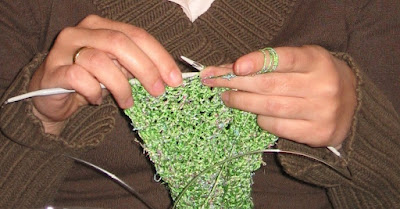

Nisam uspela sve da uslikam ;) ali ćemo to ispraviti drugom prilikom.
I onda se juče desilo nešto što me je konačno nateralo da se trgnem. Nas nekoliko je otputovalo u Zagreb da se upoznamo s pletiljama iz Hrvatske. I provele smo se fantastično, zahvaljujući velikom gostoprimstvu i druželjubivosti s kojom su nas dočekale. Hvala vam, devojke, na prelepom danu! Ne sećam se kad sam se poslednji put toliko smejala. A da ne govorim o tome da nismo zaklapale ceo dan - u povratku nas je Magrit spasila sa Septoletama inače bismo sigurno ostale bez glasa :)
A umesto grupne fotografije, evo nekoliko uposlenih ruku :) Ko nas zna, spojiće ih sam s licima :)


Nisam uspela sve da uslikam ;) ali ćemo to ispraviti drugom prilikom.
09 July 2010
A present
I've never won anything. OK, I once had a lottery ticket that won enough money to pay a month's rent. But that's all. And it doesn't really count because it was money and it was gone in a second. What I mean is that I've never won anything cherishable, anything that I'd look at and smile every time. And then I entered Fridica's giveaway a few weeks ago and I won! :)))))))))
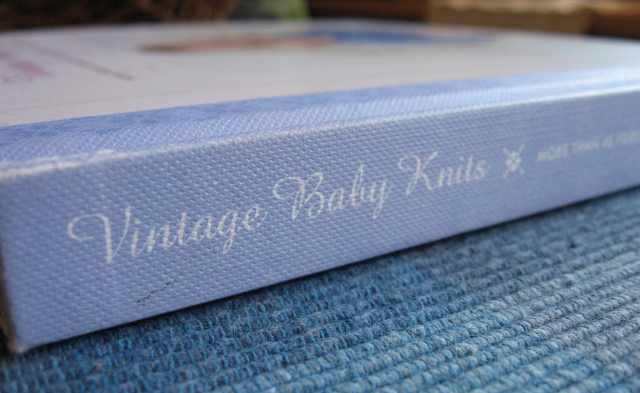
And it's not just anything, it's a beautiful book with vintage baby patterns, in packaging which Fridica embellished with stickers of babies :) Now, how cute is that?! Thank you very much, you made my day! I keep both the book and the packaging on the living room table so that they cheer me up every time I enter the room :)


And it's not just anything, it's a beautiful book with vintage baby patterns, in packaging which Fridica embellished with stickers of babies :) Now, how cute is that?! Thank you very much, you made my day! I keep both the book and the packaging on the living room table so that they cheer me up every time I enter the room :)

14 June 2010
Razglednica iz Liona / A postcard from Lyon
Prošle nedelje sam bila u Lionu - poslom doduše, ali s mnogo turističkog razgledanja (i vrlo malo štrikanja).
I spent most of last week in Lyon, on business but doing a lot of sightseeing (and very little knitting).
Bazilika Notr Dam de Fovije, posvećena Bogorodici, za koju se veruje da je u 17. veku spasila Lion od kuge.
Basilica Notre-Dame de Fourvière, dedicated to Virgin Mary, who is believed to have saved Lyon from plague in the 17th century.

Bazilika se nalazi na brdu Fovije, s kojeg se može spustiti uspinjačom ili stazom koja vas prvo vodi kroz vrt ruža ili vrt hortenzija (po izboru),
The basilica is situated on the Fourvière hill, from which you can come down either by the funicular, or you can take a downhill walk through either a rose garden or a hydrangea garden (your choice),

a potom kroz predivne strme uličice.
and then down these beautiful steep little streets.

Grad leži na dve reke, Roni i Soni, pa ima čak 4 obale. Evo detalja sa jednog od kejova, sa neobičnom vodenom instalacijom (u nedostatku bolje reči).
The city of Lyon lies on two rivers, the Rhône and the Saône, so it has as many as 4 river banks. Here's a detail from one of the quays, with an unusual water feature.

A ovo je fontana Bartoldi, s konjima kojima iz nozdrva izlazi vodena para, a koju je izvajao Frederik-Avgust Bartoldi, isti onaj koji je napravio i Kip slobode (što sam saznala tek nakon što sam se vratila kući).
This is another water feature, la Fontaine Bartholdi, with steam-breathing horses, sculpted by Frédéric-Auguste Bartholdi, the same guy who designed the Statue of Liberty (which is something I learned only after I got home).

I za kraj ovog kratkog putopisa, jedan primer kako se lepo može spojiti tradicionalna i moderna arhitektura - nadstrešnica iznad ulaza u metro.
And at the end of this short travelogue, an example of how traditional and modern architecture can be combined with success - a roof above the entrance into the metro.

I spent most of last week in Lyon, on business but doing a lot of sightseeing (and very little knitting).
Bazilika Notr Dam de Fovije, posvećena Bogorodici, za koju se veruje da je u 17. veku spasila Lion od kuge.
Basilica Notre-Dame de Fourvière, dedicated to Virgin Mary, who is believed to have saved Lyon from plague in the 17th century.

Bazilika se nalazi na brdu Fovije, s kojeg se može spustiti uspinjačom ili stazom koja vas prvo vodi kroz vrt ruža ili vrt hortenzija (po izboru),
The basilica is situated on the Fourvière hill, from which you can come down either by the funicular, or you can take a downhill walk through either a rose garden or a hydrangea garden (your choice),

a potom kroz predivne strme uličice.
and then down these beautiful steep little streets.

Grad leži na dve reke, Roni i Soni, pa ima čak 4 obale. Evo detalja sa jednog od kejova, sa neobičnom vodenom instalacijom (u nedostatku bolje reči).
The city of Lyon lies on two rivers, the Rhône and the Saône, so it has as many as 4 river banks. Here's a detail from one of the quays, with an unusual water feature.

A ovo je fontana Bartoldi, s konjima kojima iz nozdrva izlazi vodena para, a koju je izvajao Frederik-Avgust Bartoldi, isti onaj koji je napravio i Kip slobode (što sam saznala tek nakon što sam se vratila kući).
This is another water feature, la Fontaine Bartholdi, with steam-breathing horses, sculpted by Frédéric-Auguste Bartholdi, the same guy who designed the Statue of Liberty (which is something I learned only after I got home).

I za kraj ovog kratkog putopisa, jedan primer kako se lepo može spojiti tradicionalna i moderna arhitektura - nadstrešnica iznad ulaza u metro.
And at the end of this short travelogue, an example of how traditional and modern architecture can be combined with success - a roof above the entrance into the metro.

18 May 2010
Noć muzeja / Night of Museums
For this year's Night of Museums (also known as the Long Night of Museums) we found ourselves in Zrenjanin, where there were not as many events as in Novi Sad or Belgrade (or elsewhere in Europe, for that matter) but nevertheless, we enjoyed it a lot. What I like about the Night of Museums is the festive atmosphere, which, it is true, does not exactly contribute to one's ability to appreciate works of art at leasure, in peace and quiet generally found in museums in galleries, but it does stir some artistic activity in sleepy little towns such as Zrenjanin. And it draws people out. To see so many people go out in the cold and wind and driving rain just to go to the exhibitions was really good. Yes, many of them raced through the exhibitions as if only to put a tick on their list, without paying too much attention to the exhibits themselves, but these people would have never visited these places had it not been for the Night of Museums. Let's hope that at least some beauty brushed against them in the process.
We had two little kids with us so the choice of venues was limited. Among these, Zlatinka Kovačev's wool dolls were a definite highlight for me:


There were many more dolls, most of them mythological creatures, but it was crowded and we couldn't get decent photos. Unfortunately, I wasn't able to find a page I could link to or any relevant information about the author.
We had two little kids with us so the choice of venues was limited. Among these, Zlatinka Kovačev's wool dolls were a definite highlight for me:


There were many more dolls, most of them mythological creatures, but it was crowded and we couldn't get decent photos. Unfortunately, I wasn't able to find a page I could link to or any relevant information about the author.
13 April 2010
The only way is up


25 February 2010
Izložba veza / Embroidery exhibition
Prošle nedelje sam u Muzeju grada Novog Sada bila na izložbi pod naslovom "Vez po pismu, pismo po vezu". Radi se o tradicionalnim motivima vezenim različitim tehnikama, od rišeljea do goblena, na predmetima različite namene, a ono što im je zajedničko jeste upotreba pisma u vezu. Ako ste u Novom Sadu a zanima vas vez ili ručni rad uopšte, toplo preporučujem. Izložba je otvorena do 1. maja, a muzej se nalazi u Dunavskoj 29. To je na samom kraju pešačkog dela Dunavske ulice, s leve strane (mapa). Fotografisanje je bilo dozvoljeno pa evo nekoliko slika.
I went to an embroidery exhibition last week. The exhibits were mostly of traditional motifs and patterns, but what they all have in common is the use of letters and alphabets. Cameras were allowed so I was able to take a few photos.
Plakat za izložbu / Exhibition poster

Kuvarica (dozidnica). Šovinističku poruku neću komentarisati :) / I don't know the name of this in English. It's a piece of embroidered cloth that in the past (in the days before tiles began to be widely used) would be pinned onto the wall above the cooker to prevent the wall from getting dirty and as a form of decoration. A lot of sexist messages on them :) This one says something like "When the kitchen is in order, the woman is as sweet as honey".

Šporet i još jedna kuvarica ("Zašto gledaš sad u lonac kad mi nisi dao novac") / A traditional stove with another wall cloth ("Why are you looking into the pot if you didn't give me money" - it rhymes in Serbian).

Detalj iznad šporeta, vezeni držač za šibice / A detail from above the stove - a match box case.

Držači za četke i češljeve. Od bensedin art sam naučila da se ono prvo to zove "četkara" pa pretpostavljam da je ovo drugo "češljara". / Cases for hairbrushes and combs.

Krevet s vezenom posteljinom, ćilimom i ponovo dozidnicom. / A bed with embroidered bed linen, a kilim and again a wall cloth.

Vez u šifonjeru. Jako mi je simpatično što su stavili čak i dunje. / Embroidery in a traditional wardrobe. On the top you can see two half-dry quinces - people used to leave them in the rooms to dry because of the pleasant smell. Some people still do it.

I, za kraj, par ženskih gaća :) Moram sebi nabaviti jedne ovakve. Inače, ne vidi se, ali pri vrhu imaju sitnim bodom izvezeno ime vlasnice / And for the end, knickers :) I wish I had a pair of my own :) You can't see it but there's actually the name of the owner embroidered in small letters at the top, near the belt.

I went to an embroidery exhibition last week. The exhibits were mostly of traditional motifs and patterns, but what they all have in common is the use of letters and alphabets. Cameras were allowed so I was able to take a few photos.
Plakat za izložbu / Exhibition poster

Kuvarica (dozidnica). Šovinističku poruku neću komentarisati :) / I don't know the name of this in English. It's a piece of embroidered cloth that in the past (in the days before tiles began to be widely used) would be pinned onto the wall above the cooker to prevent the wall from getting dirty and as a form of decoration. A lot of sexist messages on them :) This one says something like "When the kitchen is in order, the woman is as sweet as honey".

Šporet i još jedna kuvarica ("Zašto gledaš sad u lonac kad mi nisi dao novac") / A traditional stove with another wall cloth ("Why are you looking into the pot if you didn't give me money" - it rhymes in Serbian).

Detalj iznad šporeta, vezeni držač za šibice / A detail from above the stove - a match box case.

Držači za četke i češljeve. Od bensedin art sam naučila da se ono prvo to zove "četkara" pa pretpostavljam da je ovo drugo "češljara". / Cases for hairbrushes and combs.

Krevet s vezenom posteljinom, ćilimom i ponovo dozidnicom. / A bed with embroidered bed linen, a kilim and again a wall cloth.

Vez u šifonjeru. Jako mi je simpatično što su stavili čak i dunje. / Embroidery in a traditional wardrobe. On the top you can see two half-dry quinces - people used to leave them in the rooms to dry because of the pleasant smell. Some people still do it.

I, za kraj, par ženskih gaća :) Moram sebi nabaviti jedne ovakve. Inače, ne vidi se, ali pri vrhu imaju sitnim bodom izvezeno ime vlasnice / And for the end, knickers :) I wish I had a pair of my own :) You can't see it but there's actually the name of the owner embroidered in small letters at the top, near the belt.

Subscribe to:
Posts (Atom)